Pricing=Price? ― Key point of Pricing
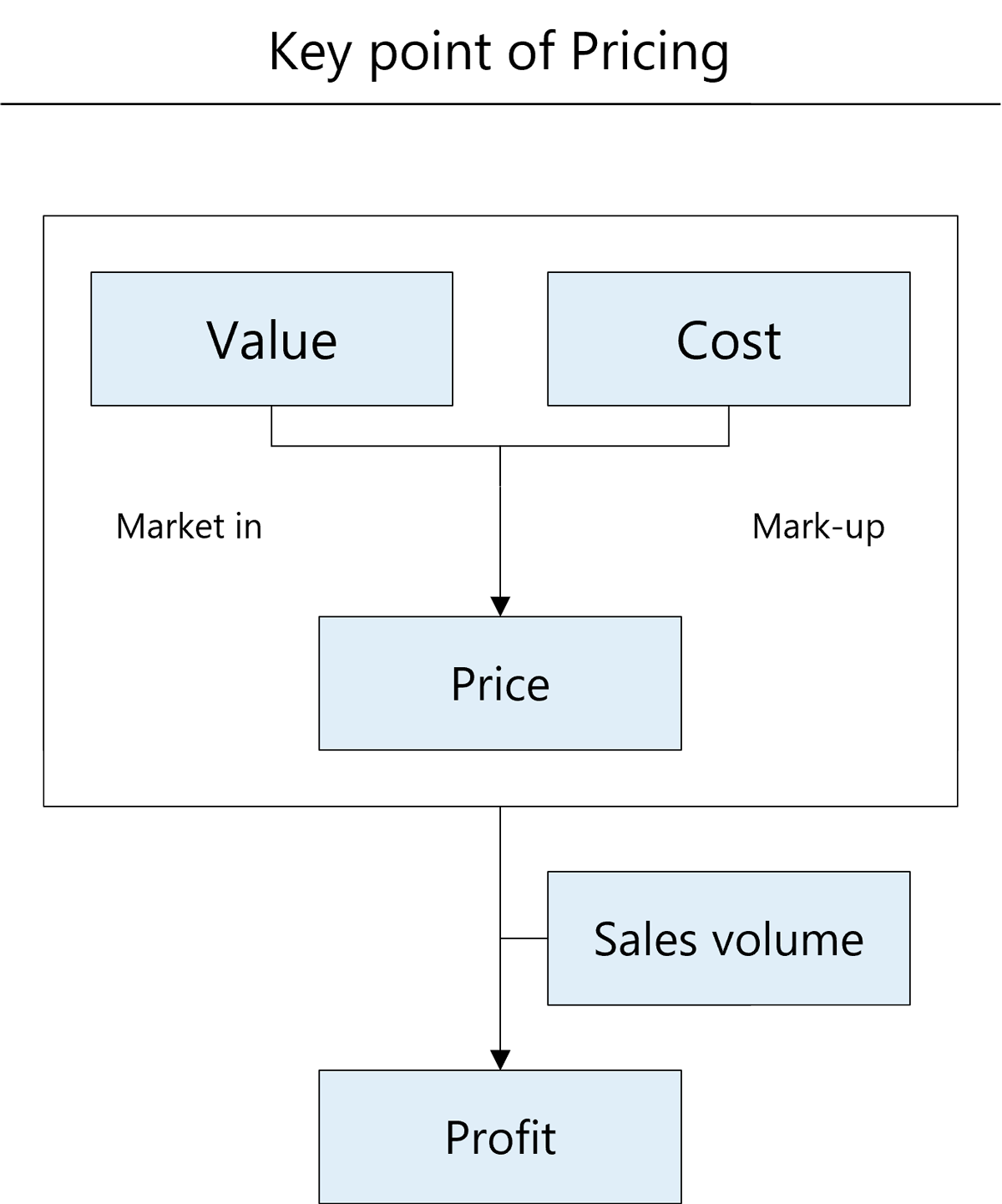
Pricing refers to the entire business process of determining the value of a product or service and transferring the value to a price to convert it into a targeted profit.
The purpose of pricing is to maximize profits, and toward this end, the value of our products and services is quantified and appropriate prices are set by considering the competitive environment and cost structure.
Controlling sales volume based on the price helps achieve the target profit.
Price is the amount of money that consumers pay to obtain the value of a product or service, and it is a parameter in the business process of pricing.
The value of a product or service depends on its function, brand history, and competitive environment.
Determining them is the key point of pricing.
Source) NRI
Two Core Pricing Strategy
Some prices are determined in the context of market forces, where the equilibrium price is reached based on consumer sentiment and the competitive environment. Other prices are set strategically.
Prices based on market forces are determined by a balance between supply and demand. Examples include bidding price, dynamic pricing, and food sales at a reduced price near closing time.
Another pricing method is to conduct market research to determine the price based on price sensitivity, in other words, the impact of the product price on the behavior of consumers, and the degree to which that impact occurs.

Source) NRI
Strategic Pricing Balances 4 key factors
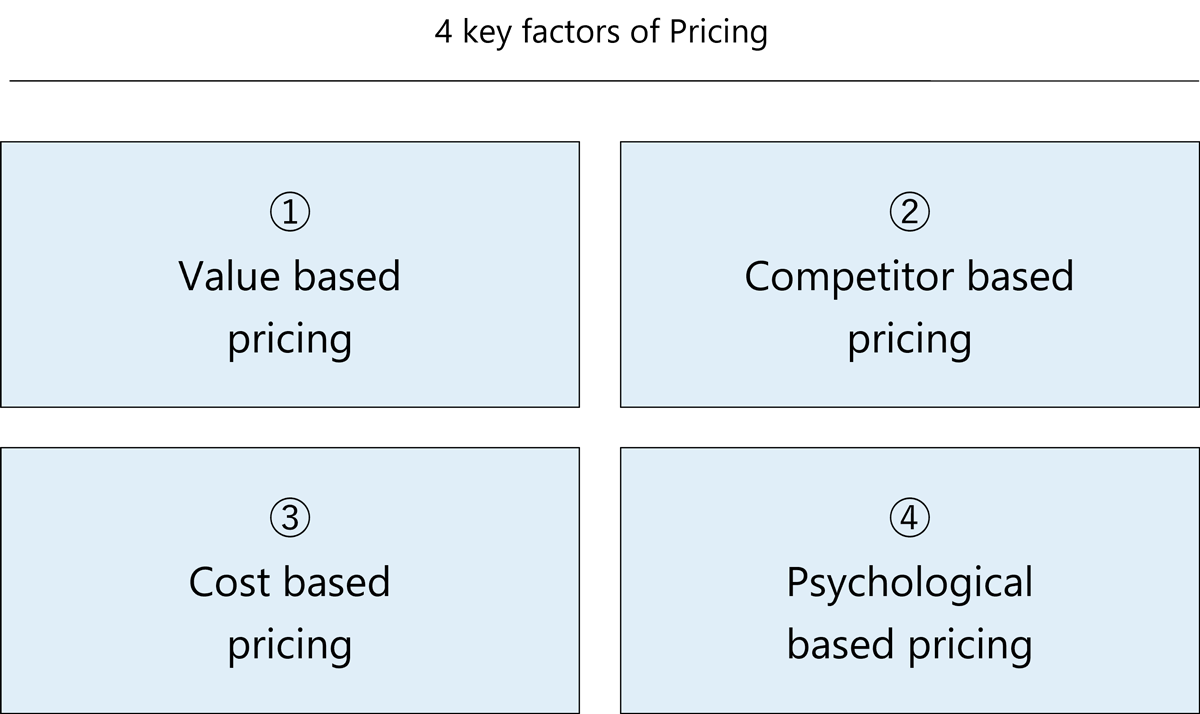
On the other hand, the three basic pricing criteria for determining prices strategically are value, competition, and cost. In a broad sense, there are four criteria with consumer sentiment added because human psychology can cause distortion.
Source) NRI
What Really Drives a Price?
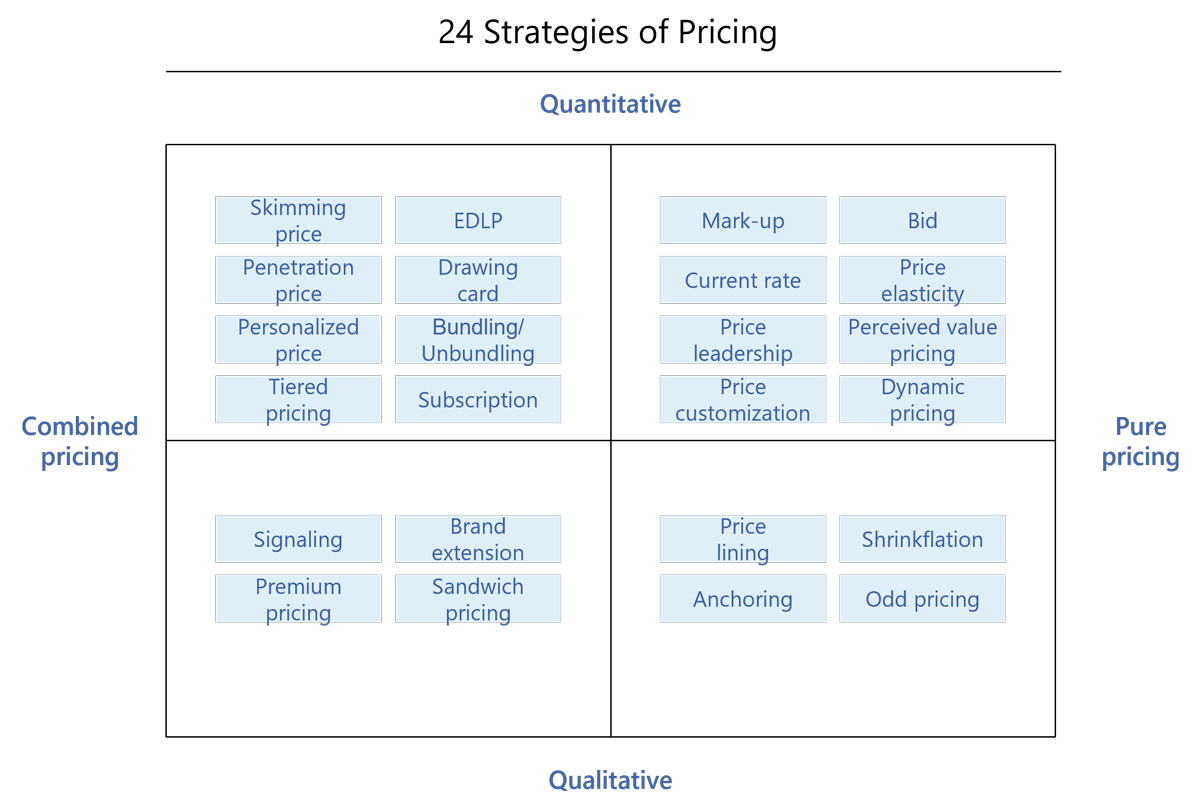
Pricing strategies can be broadly divided into two types. One is a pure strategy to determine the price level of a product or service itself or to show prices by using consumer sentiment. The other one is a complex strategy that is closely related to branding or devising sales methods.
Each can also be further divided into quantitative and qualitative approaches, totaling 24 strategies.
Source) NRI
Besides, pricing is closely related to branding.
It is important for the Chief Marketing Officer to act as a bridge between management and the site and to price consistently across the overall marketing strategy.
8 Pricing Reforms to Elevate Strategy
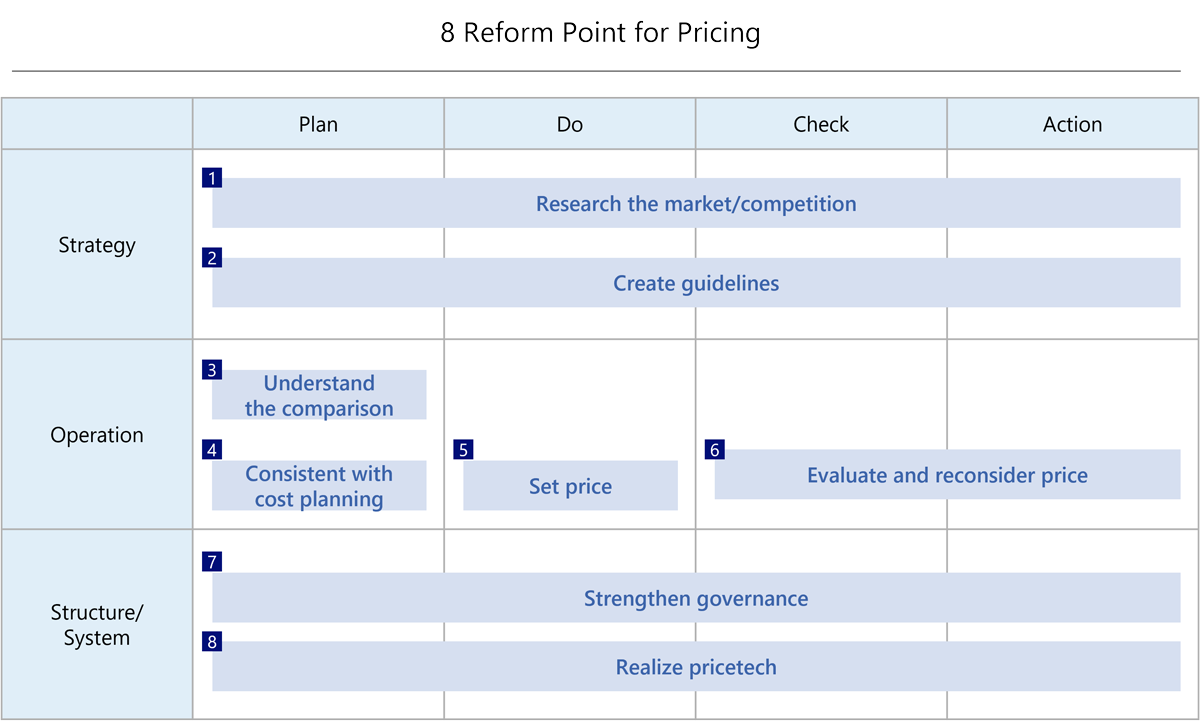
Here are eight reforms you can start working on tomorrow to raise your competency in pricing.
In formulating guidelines, formalizing know-how and best practices can eliminate dependency on individuals and improve the quality of business, strengthen organizational governance, and lead to organizational reforms.
You can exercise vertical governance to clarify the process, decision-making criteria, and the role of pricing from drafting to approval. You can also exercise horizontal governance for region and function to ensure normal business flow between areas and achieve consistency among functions.
Source) NRI
Pricing is Strategy
Prices are not set once and done but rather must be constantly reviewed by monitoring subsequent sales and getting feedback from consumers to assess whether the position is right.
Pricing is one of the key factors that leads to a company's strategy.
Ready to start your pricing transformation?
Profile
-
Mayuko TaniguchiPortraits of Mayuko Taniguchi
Consulting Business Development Department
* Organization names and job titles may differ from the current version.