As part of Nomura Research Institute's (NRI) INSIGHT SIGNAL initiative, NRI conducts regular surveys of consumers across Tokyo and the six surrounding prefectures to support marketing consulting, public policy recommendations, and information sharing. The research continuously analyzes how current events and emerging trends influence consumer behavior.
As part of these efforts, this article focuses on “New Sports” and “Eatertainment”, new forms of sports and leisure that have been attracting growing attention overseas. The survey explores how consumers perceive these emerging experiences and what values and expectations they associate with them.
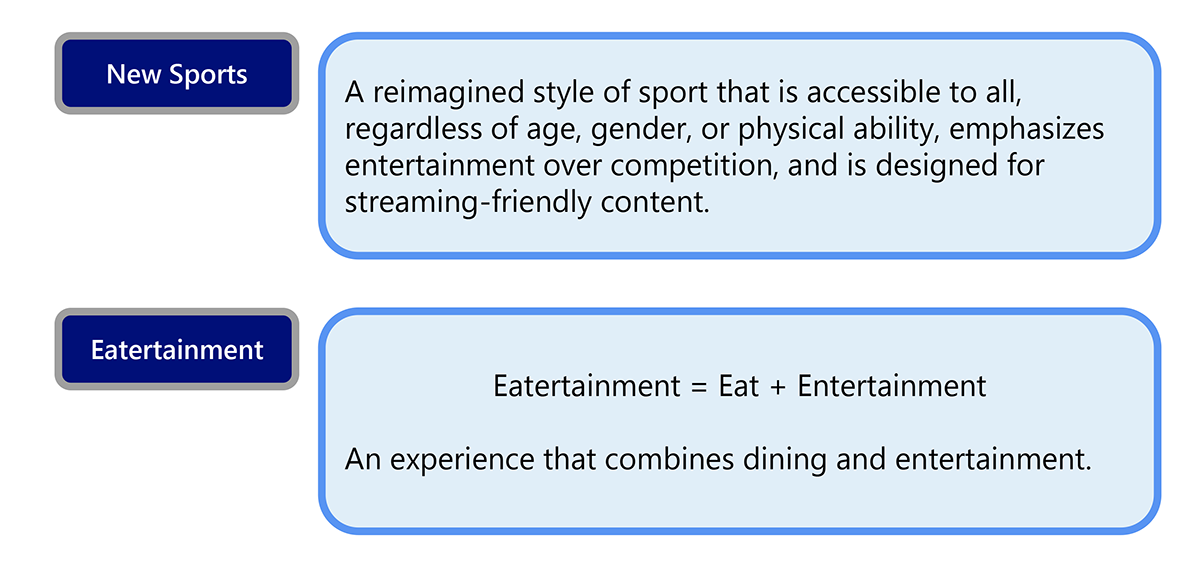
Source: NRI
Consumers Prefer Watching Sports to Playing Them
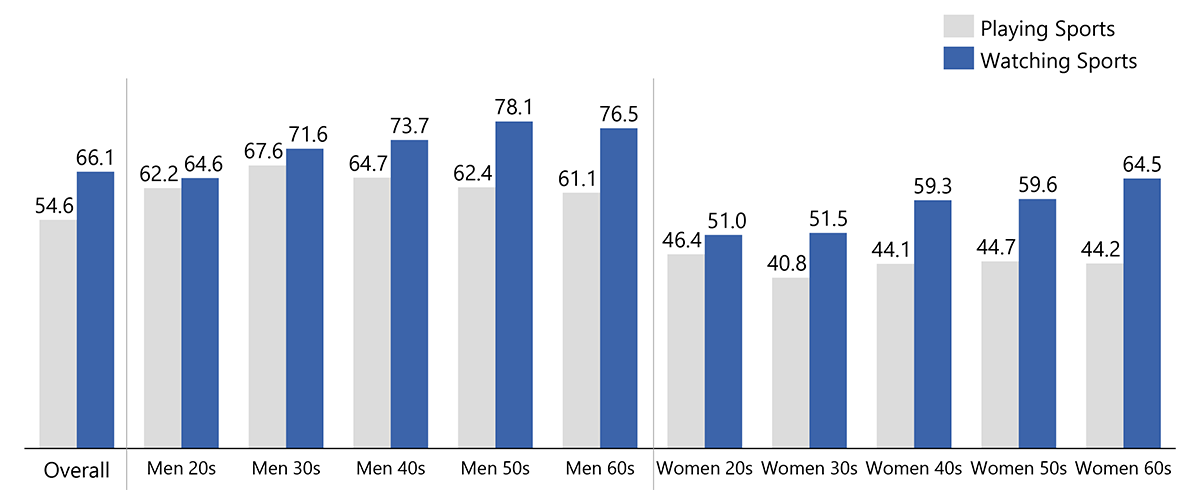
People's engagement with sports has expanded beyond simply participating to include a variety of other forms, such as watching sports. Figure 1 illustrates consumers' favorability toward playing sports and watching sports. (Respondents were asked to rate each on a four-point scale: "Like," "Somewhat like," "Somewhat dislike," and "Dislike." The chart shows the combined percentage of respondents selecting "Like" or "Somewhat like.")
Figure 1. Favorability Toward Playing and Watching Sports (%)
Source: NRI INSIGHT SIGNAL Survey (Residents aged 15–69 in Tokyo and six surrounding prefectures, June 2026, N = 3,018)
Respondents rated each item on a four-point scale ("Like," "Somewhat like," "Somewhat dislike," and "Dislike"). The chart shows the combined percentage of those who responded "Like" or "Somewhat like."
Overall, 66.1% of respondents indicated that they like or somewhat like watching sports, exceeding the 54.6% who expressed the same level of favorability toward playing sports.
Although the magnitude of this difference varies somewhat across demographic groups, the overall tendency for watching sports to be more popular than participating in them is consistent across genders and age groups. This suggests that consumers increasingly view sports not only as an activity in which they actively participate, but also as a form of entertainment that they can simply enjoy watching.
Looking more closely at demographic differences, men reported relatively high favorability toward both participating in and watching sports. Among men in their 50s, favorability toward watching sports reached 78.1%, the highest of any demographic group.
Among women, however, favorability toward playing sports remained in the low-40% range among those in their 20s through 40s, while favorability toward watching sports rose to around 60% among women in their 50s and 60s. Overall, as age increases, people tend to be less inclined to participate in sports themselves, and this tendency is more pronounced among women. Nevertheless, across every demographic segment, watching sports remained more popular than playing them.
This preference for watching sports is also reflected in actual behavior.
Overall, 52.6% of respondents reported that they rarely or never participate in sports or exercise, exceeding half of all consumers. The figure rises to 64.3% among women in their 30s. By comparison, the proportion of respondents who rarely or never watch sports on television or via online streaming was 40.5%, indicating that watching sports has a considerably broader audience than participating in them.
For many consumers, the primary way they engage with sports in their daily lives appears to be by watching them on a screen rather than participating directly.
Barriers Preventing Consumers from Enjoying Sports
What prevents consumers from engaging more with sports when they would like to enjoy them more?
Figure 2 summarizes the obstacles consumers face when they wish to participate in sports or physical activity more frequently.
Figure 2. Barriers to Enjoying Sports (Multiple Responses, %)

Source: NRI INSIGHT SIGNAL Survey (Residents aged 15–69 in Tokyo and six surrounding prefectures, June 2026, N = 3,018)
The most cited obstacle was lack of physical stamina or concerns about becoming tired (34.5%), followed by cost (30.4%) and lack of time (29.6%).
In addition to these practical constraints, respondents also identified several psychological and social barriers, including:
- Not having friends or companions to participate with (23.5%)
- Feeling embarrassed or intimidated because they are not good at sports (16.5%)
These findings suggest that consumers often find themselves caught between a desire to participate in sports and various practical and emotional barriers, including physical ability, financial cost, and self-consciousness.
These barriers also differ across demographic groups.
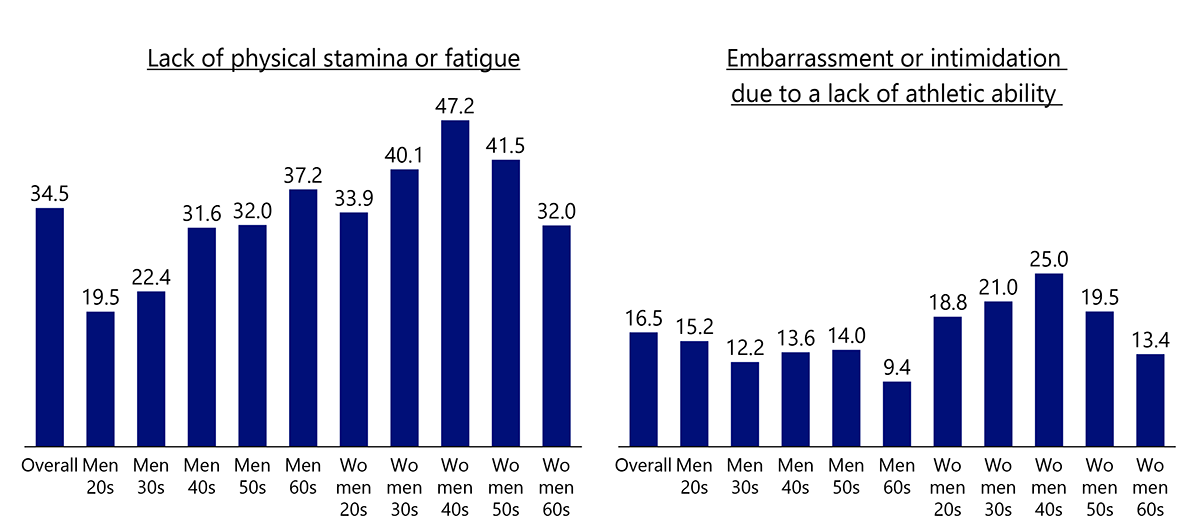
Figure 3 presents responses related to two specific barriers, lack of physical stamina and embarrassment about one's athletic ability, gender and age.
Figure 3. Percentage of Respondents Identifying "Physical Stamina"
and "Embarrassment" as Barriers (by Gender and Age)
Source: NRI INSIGHT SIGNAL Survey (Residents aged 15–69 in Tokyo and six surrounding prefectures, June 2026, N = 3,018)
The percentage of respondents citing lack of physical stamina or fatigue as a barrier was particularly high among women in their 40s (47.2%) and women in their 50s (41.5%). For both men and women, this concern generally increased with age.
Meanwhile, feelings of embarrassment or intimidation due to a lack of athletic ability were reported by roughly 10% of men across age groups, but were considerably more prevalent among younger women:
- Women in their 20s: 18.8%
- Women in their 30s: 21.0%
- Women in their 40s: 25.0%
One possible explanation is that women are more likely to feel self-conscious about their appearance or athletic performance when exercising in front of others.
These findings suggest that, in addition to physical demands, many consumers perceive the fear of appearing unskilled in front of others as a significant psychological barrier to enjoying sports.
Interest in New Sports and the Rise of Watching Sports
Against the backdrop of consumers' growing preference for watching sports and the barriers that prevent greater participation, new forms of sports that differ from traditional competitive sports have been attracting increasing attention, particularly outside of Japan.
These new sports are designed with shorter match durations to improve time efficiency, clearer and easier-to-understand rules that make participation accessible regardless of skill level, and enhanced entertainment value through music, staging, and other forms of production. They are characterized not only by their appeal as spectator events, but also by the ease with which people can participate in a short period of time without worrying about their level of athletic ability. As such, they lower the barriers to both watching and participating in sports.
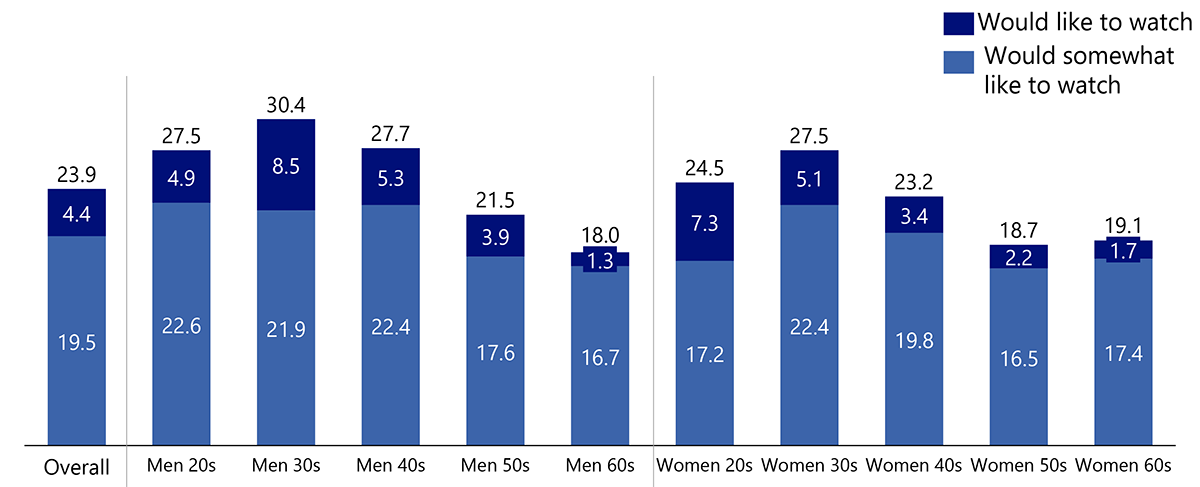
Figure 4 shows consumers' interest in watching these new sports if they were to become widely available in Japan.
Figure 4. Interest in Watching New Sports (%)
Source: NRI INSIGHT SIGNAL Survey (Residents aged 15–69 in Tokyo and six surrounding prefectures, June 2026, N = 3,018)
Overall, 24.0% of respondents indicated that they would like to watch, or would somewhat like to watch, these new sports.
Interest was relatively high among younger consumers, including 30.4% of men in their 30s, 27.7% of men in their 40s, and 27.6% of women in their 30s. By contrast, interest declined with age, falling to 17.9% among men in their 60s and 19.2% among women in their 60s. These findings suggest that new forms of sports viewing are more readily embraced by younger generations who are familiar with digital entertainment.
What aspects of these new sports appeal most to those who expressed an interest in watching them?
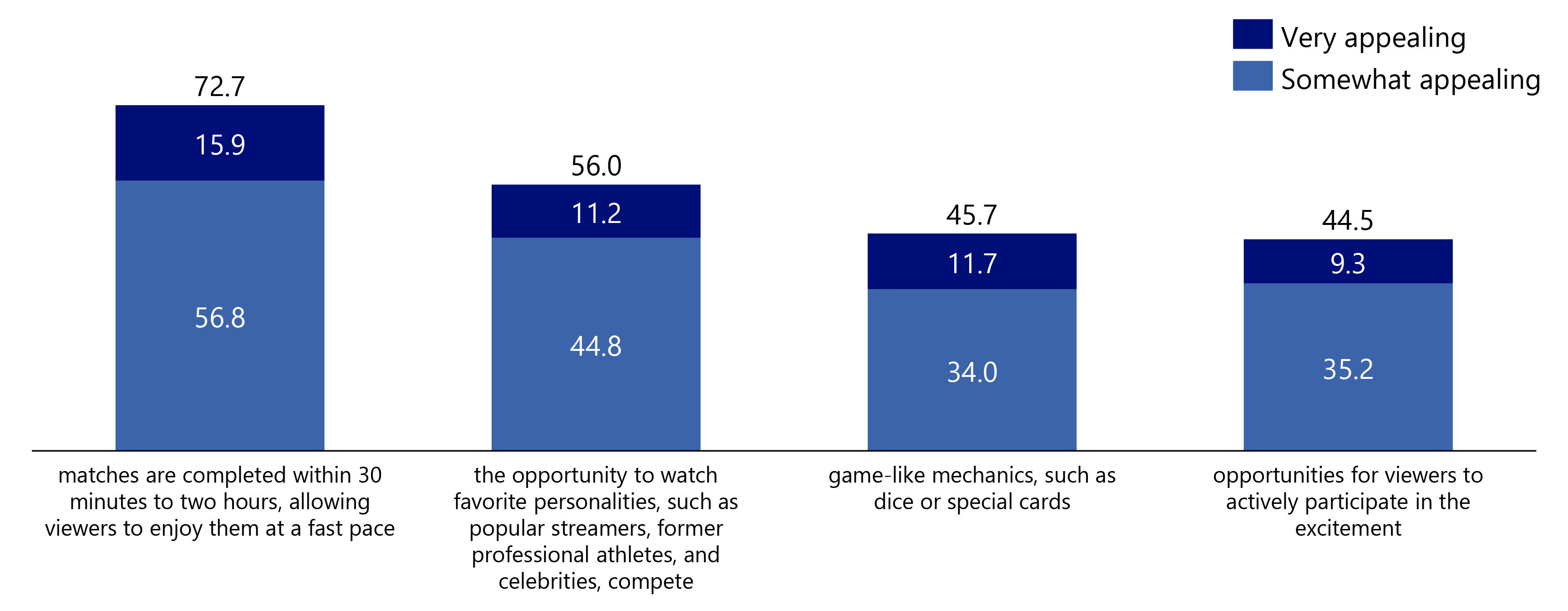
Figure 5 summarizes the attractiveness of various characteristics of new sports among respondents who indicated an interest in watching them.
Figure 5. Appealing Features of New Sports (Respondents Interested in Watching New Sports, %)
Source: NRI INSIGHT SIGNAL Survey (Residents aged 15–69 in Tokyo and six surrounding prefectures, June 2026, N = 3,018)
The most appealing feature, cited by 72.7% of respondents, was that matches are completed within 30 minutes to two hours, allowing viewers to enjoy them at a fast pace.
This was followed by the opportunity to watch favorite personalities, such as popular streamers, former professional athletes, and celebrities, compete, which was selected by 55.9% of respondents.
By comparison, game-like mechanics, such as dice or special cards (45.7%), and opportunities for viewers to actively participate in the excitement (44.5%), were somewhat less appealing.
These findings suggest that consumers are drawn less by unconventional gimmicks than by sports that are concise, easy to understand, and enjoyable without feeling drawn out. They also value the opportunity to support personalities they already follow and admire.
Clearer and easier-to-understand rules and entertainment-focused presentation may also help attract consumers who are unfamiliar with traditional sports or who feel hesitant about participating because of differences in athletic ability.
In terms of viewing preferences, 64.1% preferred watching from home on television, while 46.8% preferred online streaming at home. At the same time, 45.2% expressed an interest in attending events in person.
Even when it comes to these new sports, consumers generally prefer to first experience them from the comfort of home. As their interest grows, however, they also see themselves attending events in person. This suggests a gradual, step-by-step pattern of engagement.
From "Playing" to "Playing and Gathering": Interest in Eatertainment
As the ways in which people engage with sports continue to diversify, new formats are also emerging that lower the barriers to participation. One example is eatertainment, an entertainment concept that combines sports activities, such as mini golf and darts, with food and beverages.
The appeal of eatertainment extends beyond simply enjoying sports while dining. It also provides a casual setting where people can gather without worrying about their athletic ability, special equipment, or the number of participants. In this sense, eatertainment serves not only as a recreational activity, but also as a social space where people can meet and spend time together.
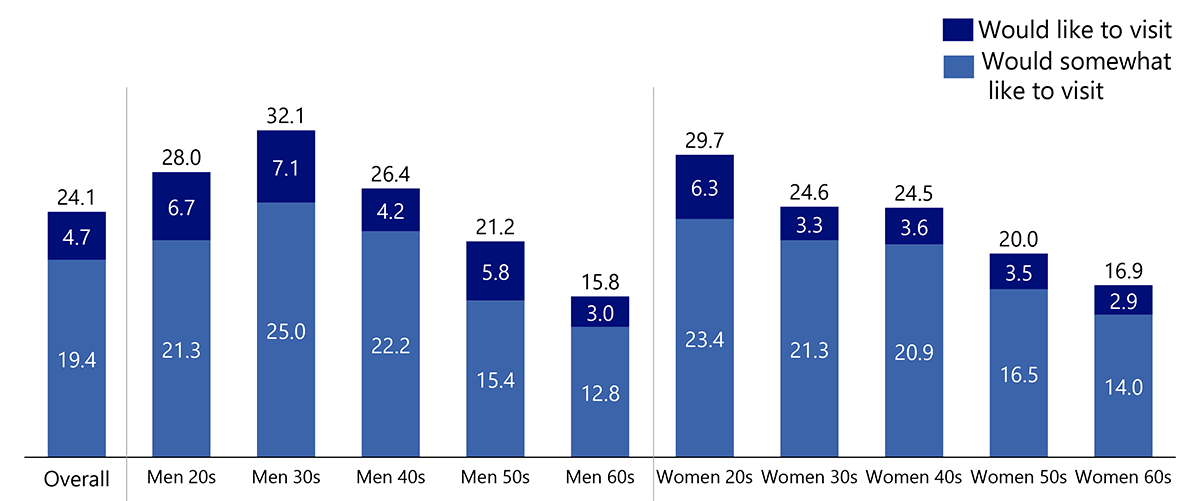
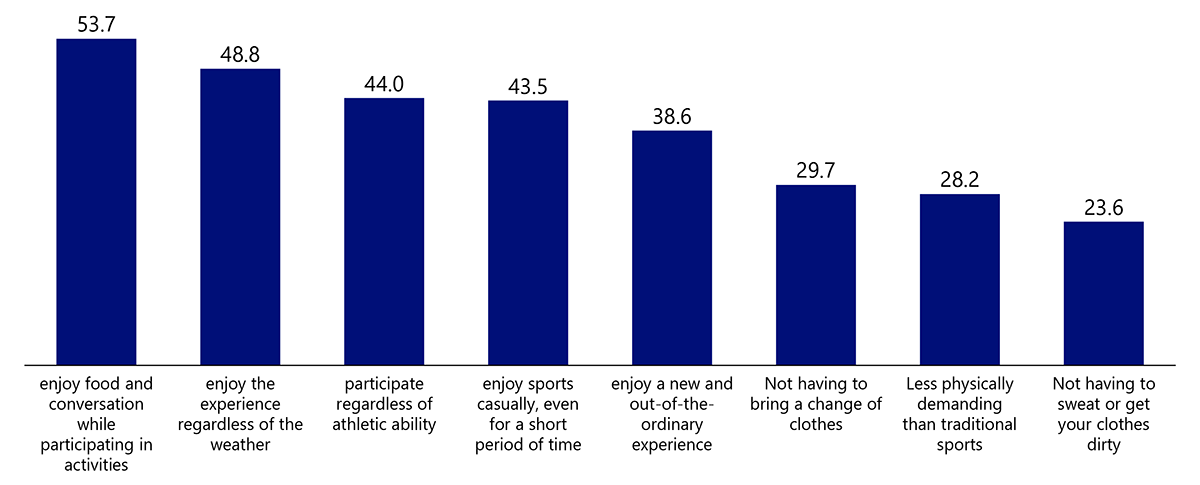
Figure 6 shows consumers' interest in visiting eatertainment venues, while Figure 7 summarizes the types of experiences they hope to have at these facilities.
Figure 6. Interest in Visiting Eatertainment Venues (%)
Source: NRI INSIGHT SIGNAL Survey (Residents aged 15–69 in Tokyo and six surrounding prefectures, June 2026, N = 3,018)
Figure 7. Experiences Consumers Expect from Eatertainment Venues
(Respondents Interested in Visiting Eatertainment Venues, Multiple Responses, %)
Source: NRI INSIGHT SIGNAL Survey (Residents aged 15–69 in Tokyo and six surrounding prefectures, June 2026, N = 3,018)
Overall, 24.1% of respondents indicated that they would like to visit, or would somewhat like to visit, an eatertainment venue. As with new sports, interest was higher among younger consumers, including 32.1% of men in their 30s and 29.7% of women in their 20s.
When asked what they expected from the experience, the most common response was being able to enjoy food and conversation while participating in activities, selected by 53.7% of respondents. This was followed by being able to enjoy the experience regardless of the weather (48.8%), being able to participate regardless of athletic ability (44.0%), and being able to enjoy sports casually, even for a short period of time (43.5%). A notable finding is that many of the highest-ranked responses relate not to athletic performance or physical ability, but rather to convenience, comfort, and spending time with others.
These findings can be better understood when viewed alongside the barriers to sports participation discussed earlier. Expectations such as not requiring much physical effort, not needing to bring a change of clothes, and being able to enjoy activities without breaking a sweat directly address the physical and psychological barriers consumers associate with sports.
Being able to enjoy activities regardless of athletic ability was especially appealing among older women, reaching 56.8% among women in their 50s and 62.1% among women in their 60s. This suggests that consumers who have traditionally felt less comfortable participating in sports themselves are particularly attracted to experiences where athletic skill is not a consideration.
Rather than viewing eatertainment as a place to compete or demonstrate athletic ability, consumers appear to value it primarily as an opportunity to spend enjoyable time with friends and family while sharing food, drinks, and conversation.
Because these venues require little preparation, no specialized equipment, and few restrictions on group size, they also make it easier to invite people who would not normally participate in sports. As a result, consumers perceive eatertainment as a venue that creates opportunities for people to meet and spend time together.
This is also reflected in the occasions for which respondents would use these facilities. The most common responses were casual gatherings or drinks with friends (41.1%) and family outings or weekend leisure activities (37.8%). When asked whom they would most like to visit with, friends and acquaintances ranked highest at 53.3%.
These findings suggest that, although sports remain a central element of the experience, consumers primarily perceive eatertainment as a social venue where people can gather and connect.
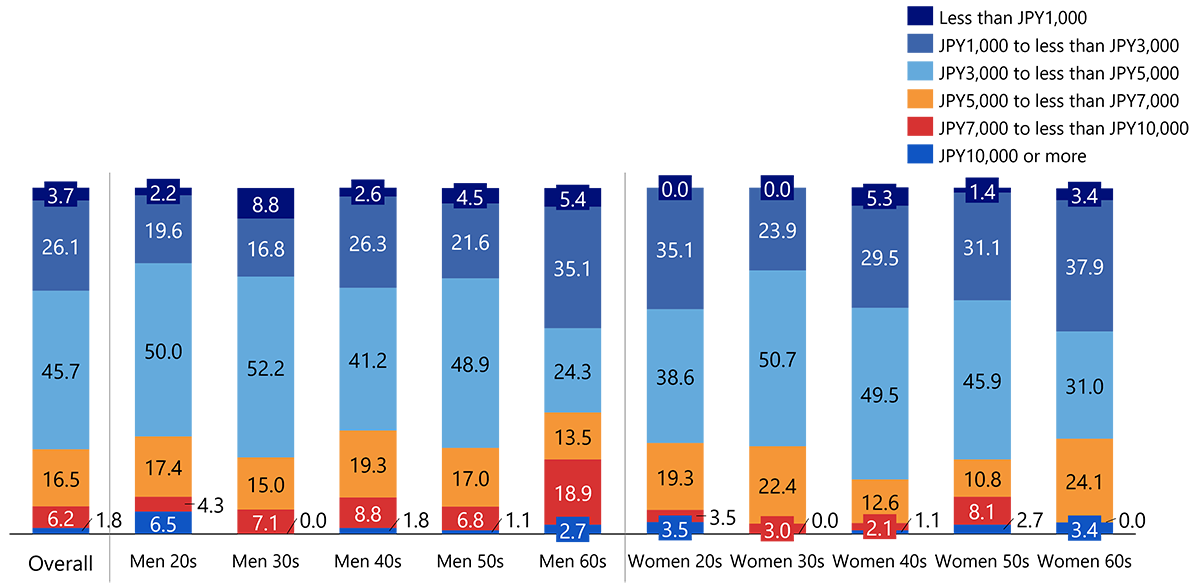
Turning to pricing, Figure 8 shows the amount respondents would be willing to pay per person for an eatertainment experience lasting approximately two to three hours, including food and beverages.
Figure 8. Acceptable Price Range for Eatertainment in Japanese Yen
(Respondents Interested in Visiting Eatertainment Venues, %)
Source: NRI INSIGHT SIGNAL Survey (Residents aged 15–69 in Tokyo and six surrounding prefectures, June 2026, N = 3,018)
Note: All monetary values are expressed in Japanese yen.
The largest share of respondents, 45.7%, indicated that they would be willing to pay between JPY3,000 and JPY5,000 per person, followed by 26.1% who selected between JPY1,000 and JPY3,000. These findings suggest that most consumers view eatertainment as an experience that should be priced within the range of an everyday dining occasion, with the additional value of entertainment.
Interest in experiential entertainment venues is not limited to eatertainment. 26.0% of respondents expressed an interest in public viewing venues that recreate the atmosphere of premium stadium seating through high-definition 360-degree visuals and immersive audio. In addition, 24.3% showed interest in large social sports complexes where multiple sports activities and dining are available within a single venue.
There is meaningful consumer interest in integrated leisure experiences that combine watching, participating, and dining within a single destination.
Conclusion
The survey findings suggest that consumers increasingly view sports not as something that requires effort and commitment, but as an opportunity to spend enjoyable time with others in a casual and accessible way.
Watching sports has become more popular than participating in them. Even among consumers who would like to become more involved in sports, barriers such as physical fitness, cost, and concerns about being seen as unskilled often discourage participation.
Against this backdrop, emerging trends such as new sports, which are easy to understand, require little time, and are accessible regardless of athletic ability, and eatertainment, which allows people to gather without extensive preparation or concerns about group size, are attracting attention because they directly address many of the barriers consumers face.
Importantly, consumers are not primarily seeking highly competitive sporting experiences or focusing on winning and losing. Instead, they value leisure experiences that are short, casual, social, and enjoyable regardless of skill level. Interest in these low-barrier leisure experiences is particularly strong among younger generations, but it is also evident among women and older adults who have traditionally felt less inclined to participate in sports themselves. The strong interest shown by these groups is especially noteworthy. It suggests that experiences which remove concerns about athletic ability and lower the barriers to participation have the potential to engage consumers who have previously felt disconnected from sports.
Looking ahead, emerging concepts such as new sports and eatertainment are likely to expand consumers' leisure options by bringing together areas that have traditionally existed separately, including sports, entertainment, dining, and social interaction.
| Survey Name | NRI INSIGHT SIGNAL Survey |
|---|---|
| Survey Period | June 2026 |
| Methodology | Online survey |
| Target Population | Male and female residents aged 15 to 69 living in Tokyo and the six surrounding prefectures |
| Valid Responses | 3,018 respondents |
| Key Survey Topics |
|
From "Playing Sports" to "Watching and Enjoying Sports"
How “New Sports” and “Eatertainment” Reflect Changing Consumer Leisure Values
Author Information
-
- Author
- Mayuko Taniguchi
- Department
- Senior Researcher
- Organization names and Job titles
- Consulting Business Development Department
-
- Author
- Hiroyuki Hayashi
- Department
- Chief Consultant
- Organization names and Job titles
- Marketing Strategy Consulting Department
-
- Author
- Keiichiro Tanimoto
- Department
- Chief Consultant
- Organization names and Job titles
- Social System Consulting Department 1