Our Services
Architectural Grand Design
Digital Architecture Concept
In the digital age, IT architecture must prioritize speed, agility, and seamless data utilization to meet the evolving demands of modern businesses. Designing a comprehensive digital architecture that encompasses the entire enterprise system, including legacy systems, is essential for staying competitive in an ever-changing environment.
A business's competitiveness now hinges not only on its ability to respond quickly to clients' current needs but also on its capacity to anticipate and efficiently deliver the value clients may desire in the future.
Under these circumstances, IT architecture must provide speed and agility while ensuring seamless data utilization. These capabilities enable the effective collection, analysis, and application of data from corporate and business IT systems to support informed decision-making.
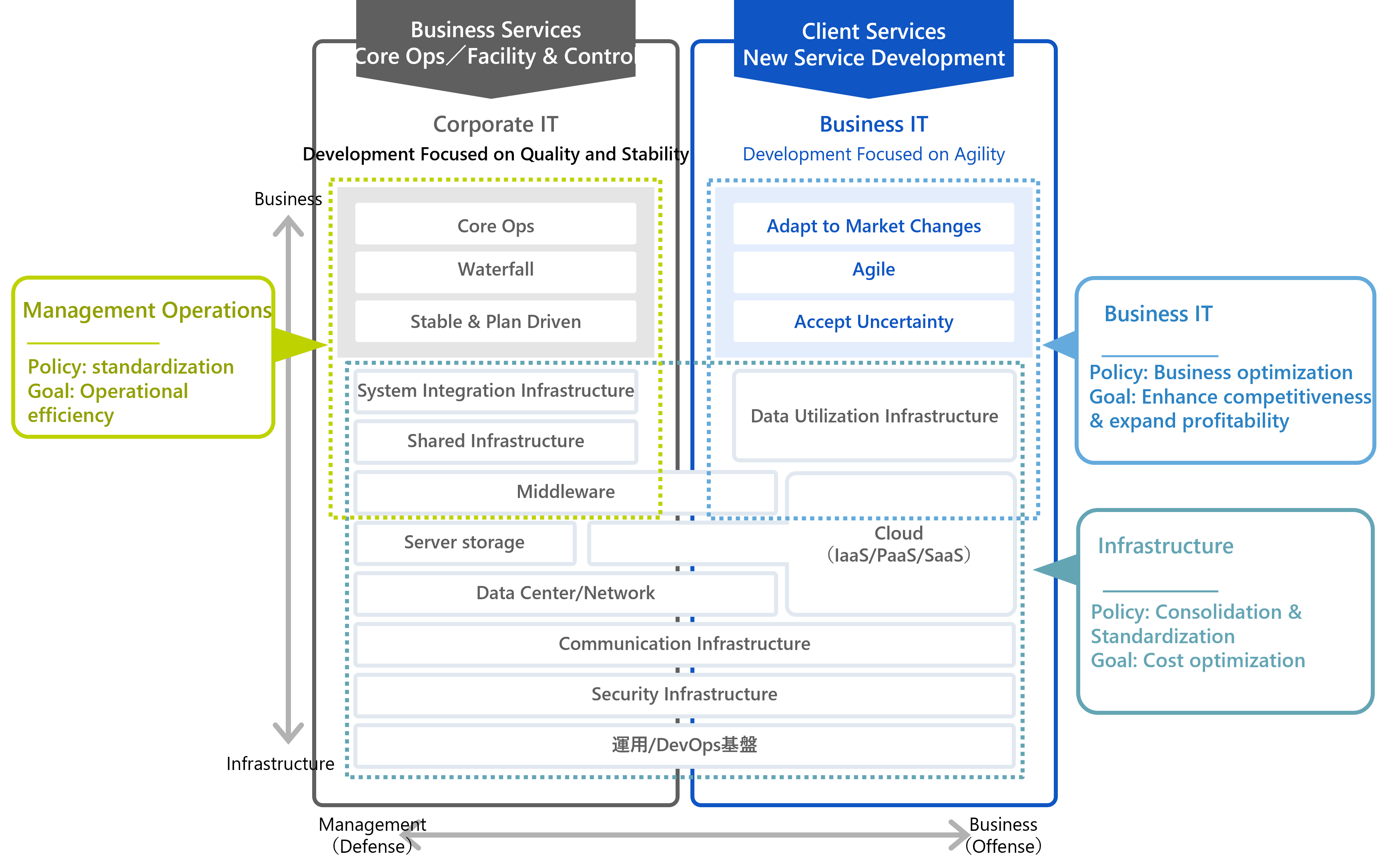
Beyond these foundational elements, each organization must identify the unique components necessary for its IT architecture. Solutions must align closely with specific business needs by defining the ideal IT architecture, outlining the steps to realize it, and providing a clear, actionable implementation roadmap.
NRI's Digital Architecture Concept Service empowers clients to design IT architectures tailored to the demands of the digital era. By leveraging our robust reference architecture, we assess the ideal enterprise-wide IT architecture for our clients and craft a detailed roadmap to bring that vision to life.
Digital Architecture Diagnosis
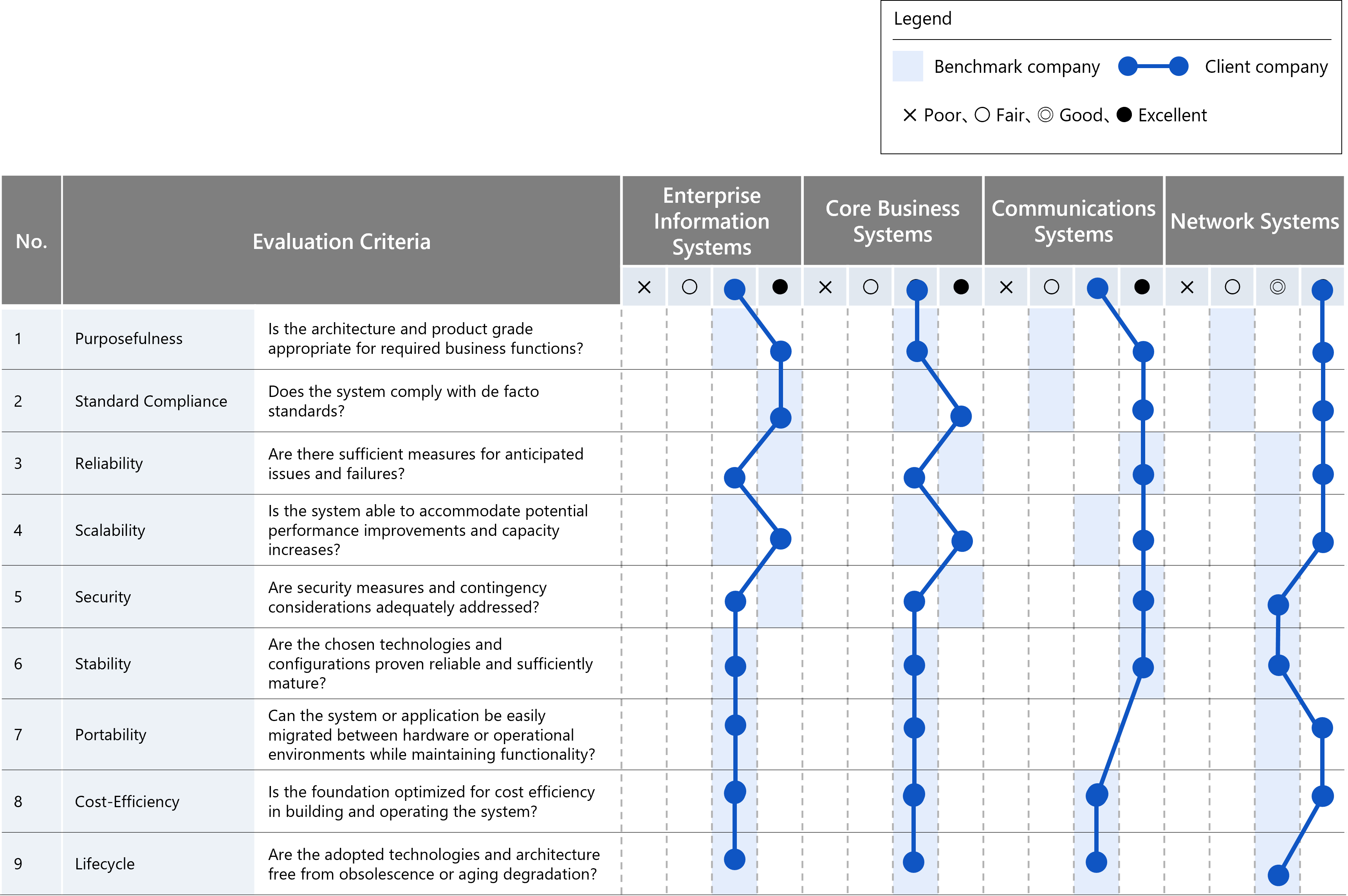
Drawing on NRI's extensive expertise in system development and operation, we offer robust evaluation for IT infrastructure diagnostics, complemented by relevant benchmark data.
Based on our expertise in system development and operation, this methodology provides evaluation criteria for IT infrastructure diagnostics and related benchmark information.
Benefits and Expected Outcomes
- Identify the current status of IT infrastructure and issues that require attention.
- Define specific measures for improving the IT infrastructure and establish clear priorities for their implementation.
IT Infrastructure Diagnosis Assessment Items
Evaluation criteria and key metrics for IT infrastructure, developed based on NRI's extensive expertise accumulated through real-world development and operational experience.
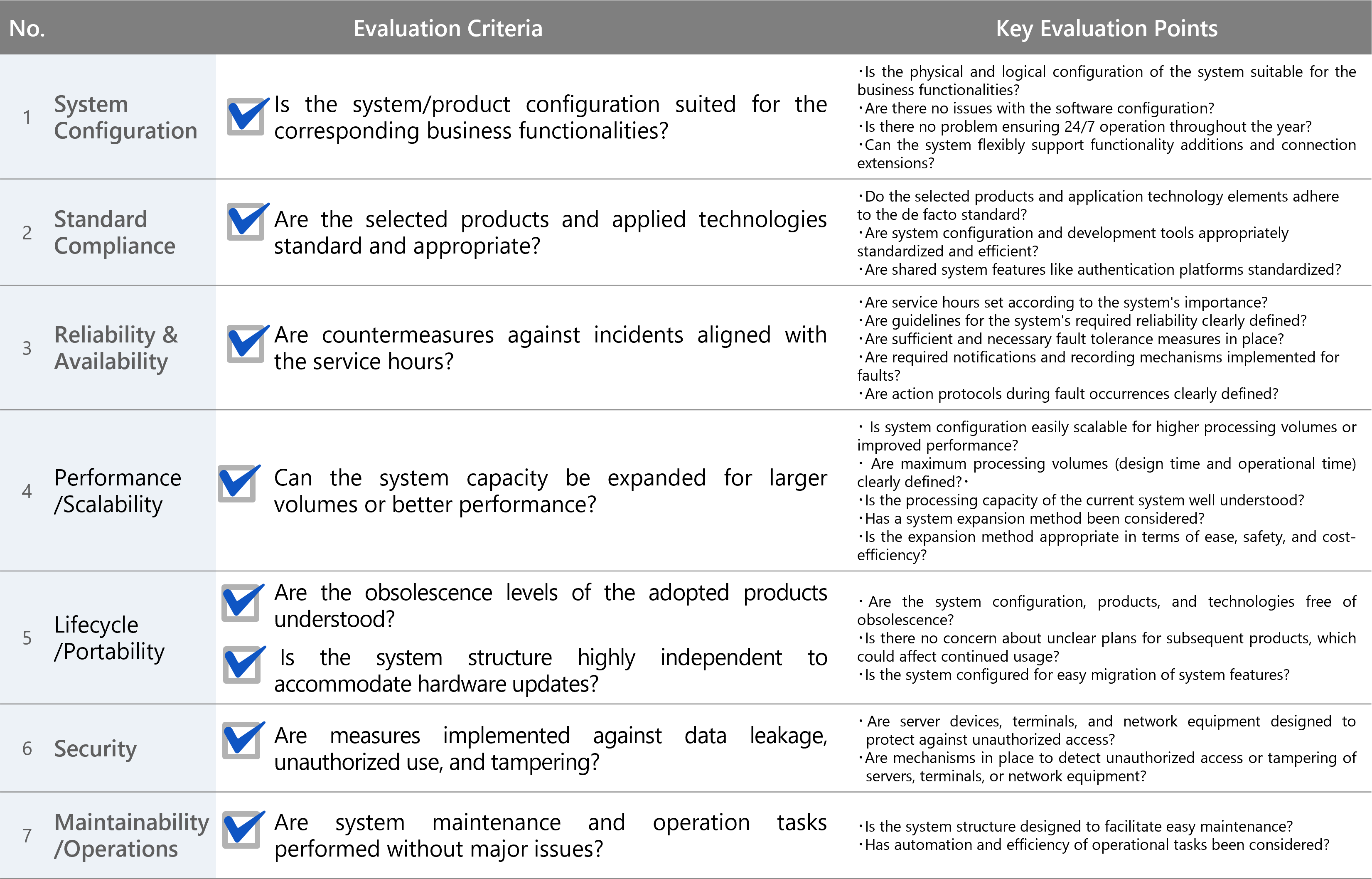
Image of IT infrastructure Diagnosis Results
Evaluation criteria and key metrics for IT infrastructure, developed based on NRI's extensive expertise accumulated through real-world development and operational experience.
IT Modernization
NRI supports the transition to modern architectures and operations that maximize value for clients. This involves moving away from legacy technologies like mainframes and COBOL, dismantling monolithic core systems, and addressing operational inefficiencies that have become opaque due to prolonged outsourcing.
Infrastructure to Solve Social Issues
Operating a sound supply chain that transcends corporate boundaries is essential to achieving a recycling-oriented society. We support visualizing materials, distribution, labor, and other factors across the supply chain to help build a sustainable and resilient platform.
Application Architecture
Microservices Support
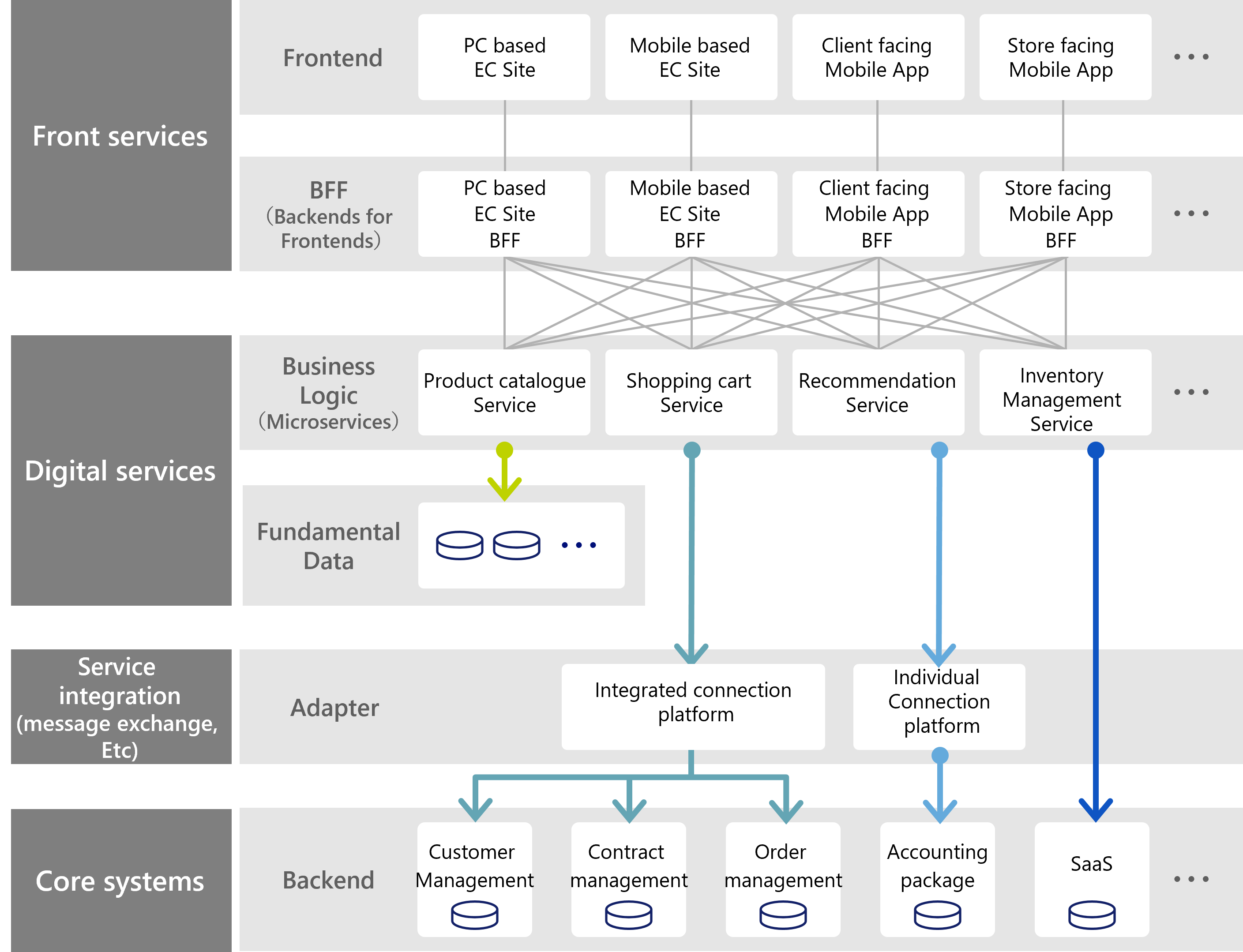
At NRI, we help accelerate development and improve quality through microservices architecture. Our expertise supports the transformation of existing systems into scalable, efficient microservices solutions.
Microservices architecture is a type of service-oriented architecture in which a system is composed of a collection of loosely coupled small services (microservices).
In a monolithic system, even a partial modification affects the entire system, making the scope of impact investigation and testing during system development vast, with a high likelihood of omissions. In contrast, a microservices architecture, consisting of loosely coupled services, localizes the scope of impact, thereby accelerating development speed and improving service quality.
To implement a microservices architecture, it is essential to consider aspects unique to microservices, which differ from those of monolithic systems.
NRI’s microservices support service leverages best practices for transitioning to a microservices architecture, such as service partitioning using domain-driven design and event storming, transaction processing, aggregation handling, migration strategies, and more, to assist with the transformation.
Data Architecture
Data Utilization Infrastructure Concept
We support the development of a robust data utilization infrastructure that effectively utilizes both internal and external data sources to drive value creation.
The growing expectation of utilizing data as a strategic business resource is driving the need to create new value through its effective use. By implementing a company-wide data utilization infrastructure, organizations can integrate and manage diverse data sources, such as internally dispersed information, external datasets, and IoT sensor outputs, to unlock the full potential of their accumulated data. Advanced technologies like AI, image analysis, and other digital solutions further enhance this capability. Leveraging NRI's extensive expertise, we provide end-to-end support, from analyzing data utilization strategies and designing comprehensive infrastructures to developing actionable roadmaps for successful implementation.
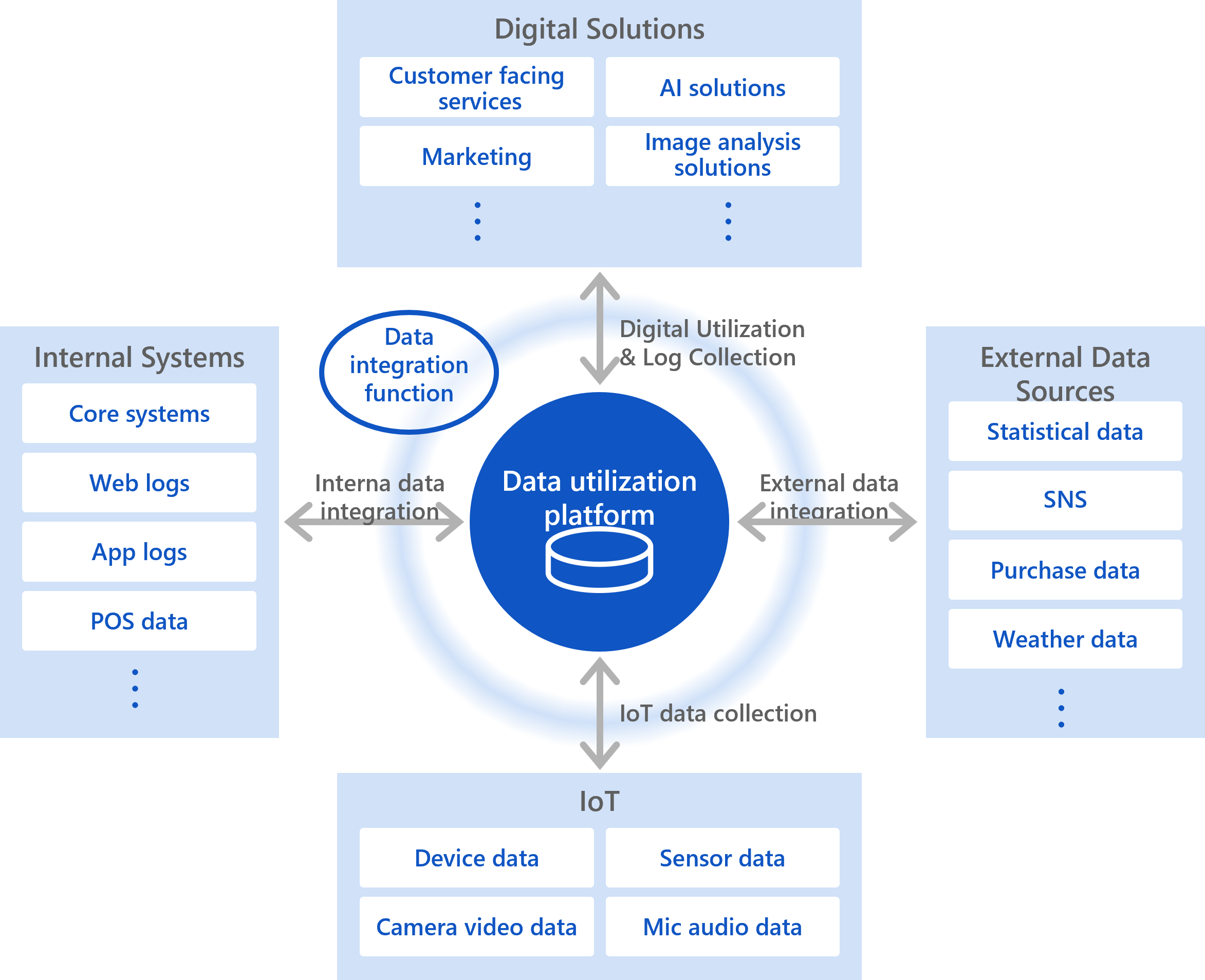
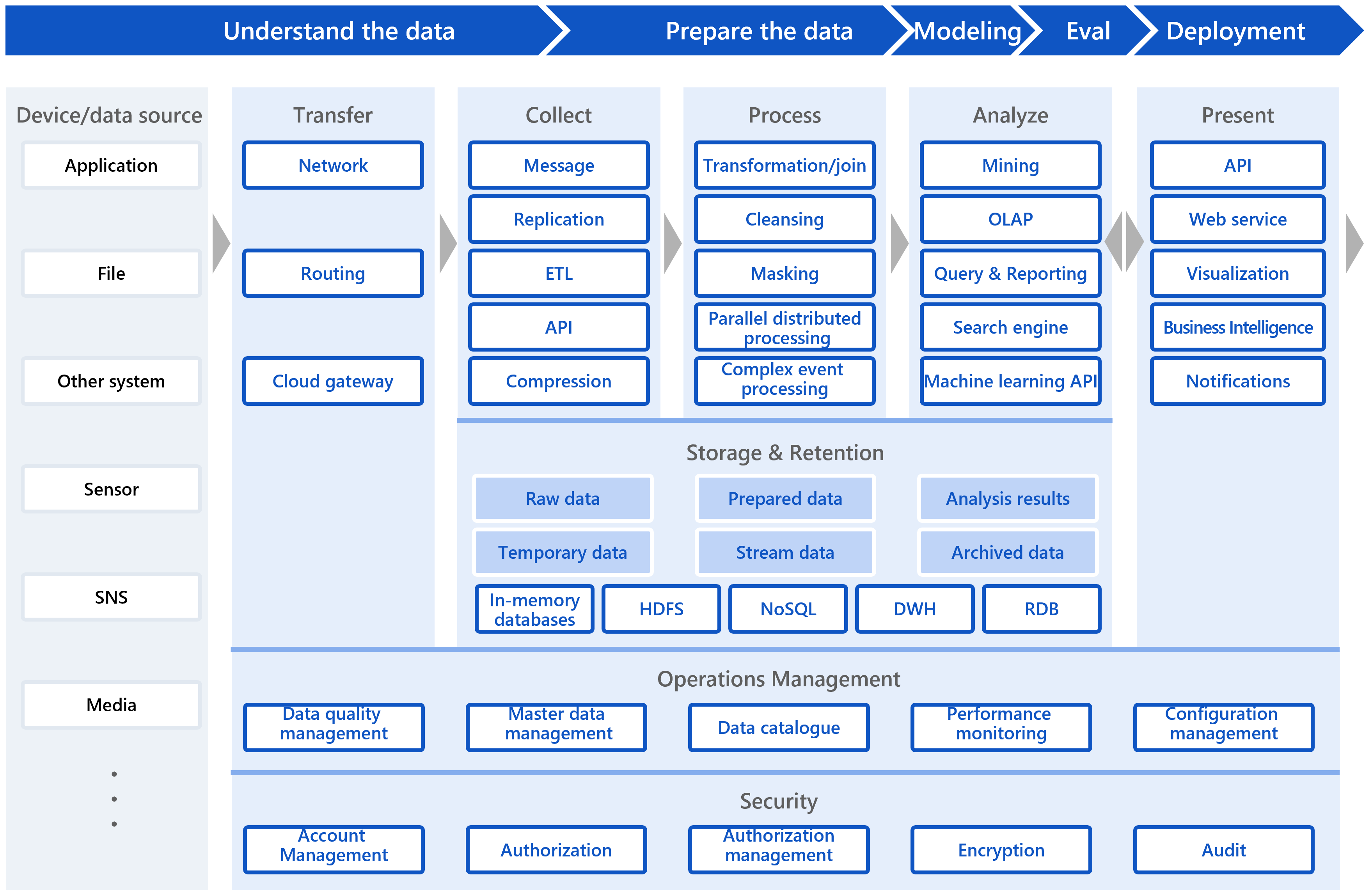
A data utilization infrastructure requires various functions such as data collection from internal and external data sources, data formatting, storage/retention, analysis, operation, and security. NRI efficiently supports the construction of an optimal data utilization infrastructure by utilizing a reference architecture that organizes the functions required for a data utilization infrastructure based on the data analysis process.
Technology Architecture
Cloud Native Support
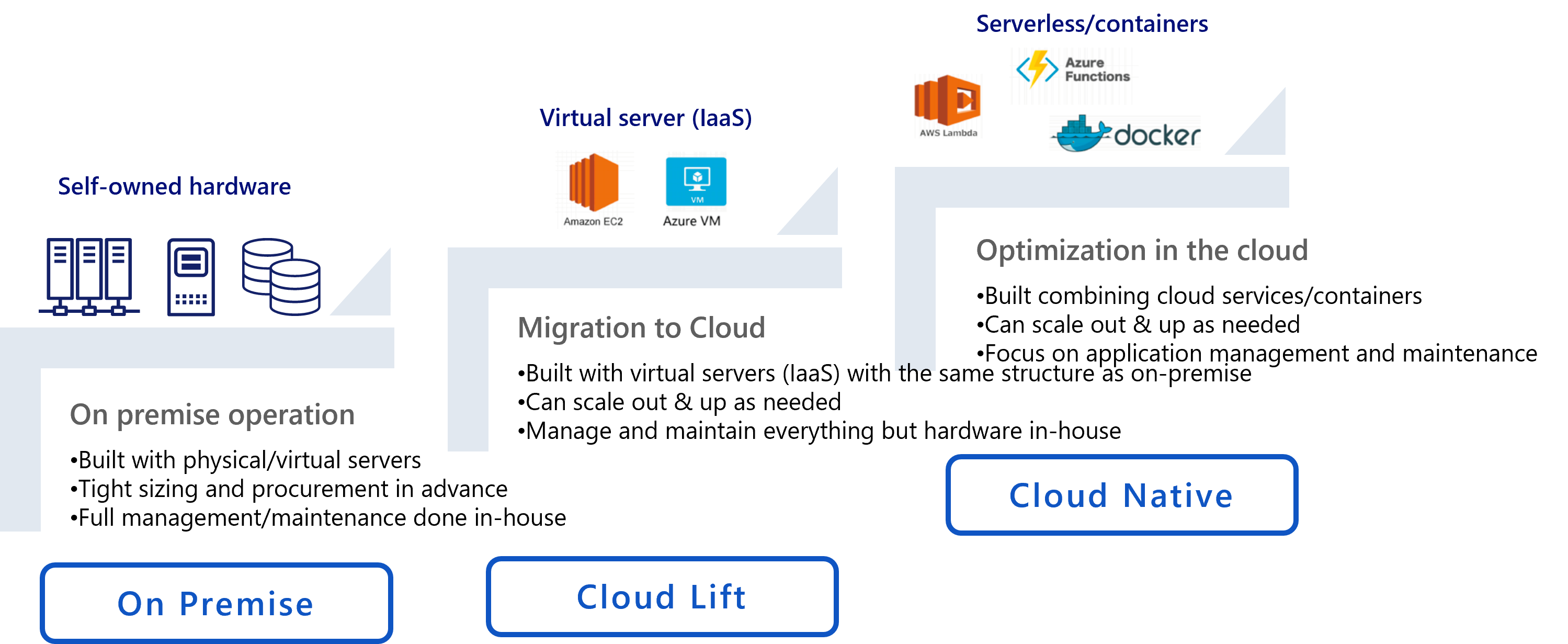
At NRI, we leverage our extensive experience to support clients transitioning to cloud-native systems, helping them fully realize the advantages of the cloud.
Migrating an on-premise system to the cloud as-is does not maximize the benefits of the cloud. To unlock the full benefits, it is essential to adopt architecture, design, development, and operations tailored specifically to the cloud.
In today's fast-paced digital landscape, IT systems must be agile and responsive to keep pace with evolving business needs. Cloud-native systems excel in this regard, boosting speed, flexibility, and operational efficiency while minimizing burdens.
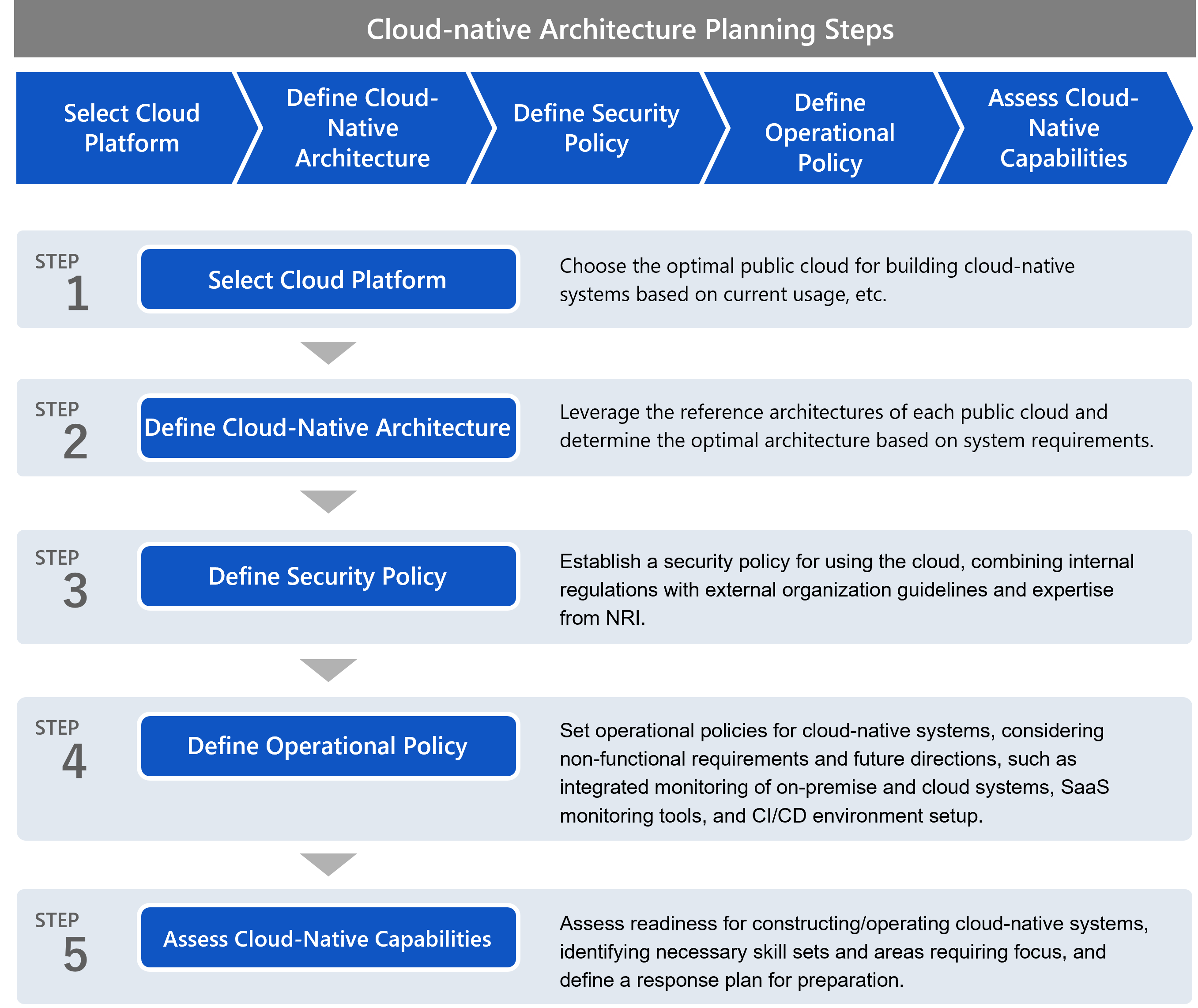
However, building and operating a cloud-native system goes beyond architecture; it requires a holistic approach.
NRI offers end-to-end support for seamless cloud-native adoption. Backed by extensive expertise, we assist with architecture design, security enhancement, and operational policy formulation to ensure successful implementation and sustained performance.
Advanced Technology Research
This methodology provides trends and evaluation results of new technologies such as the cloud, SaaS, SOA, and IT modernization. Based on this technical information and actual applications in user companies, we provide a realistic technology roadmap for the utilization and introduction of new technologies.
Benefits and Expected Outcomes
- Clear policies for leveraging IT infrastructure technologies.
- Smooth and effective adoption of new IT infrastructure technologies.
Advanced IT Technology Survey
Our research department conducts in-depth evaluations of advanced IT technologies, providing insights into emerging trends and forecasting the future development and adoption of these innovations.
Roadmap for Advanced IT Technology Implementation
NRI provides a structured template to prioritize future IT infrastructure needs. This template considers the client’s current IT landscape and strategic goals, ensuring an optimized approach to future developments.
Security Architecture
Zero Trust Concept Formulation Support
Zero Trust is a security concept that supports the diversification of work styles. It involves formulating a vision for the security infrastructure that underpins digital initiatives.
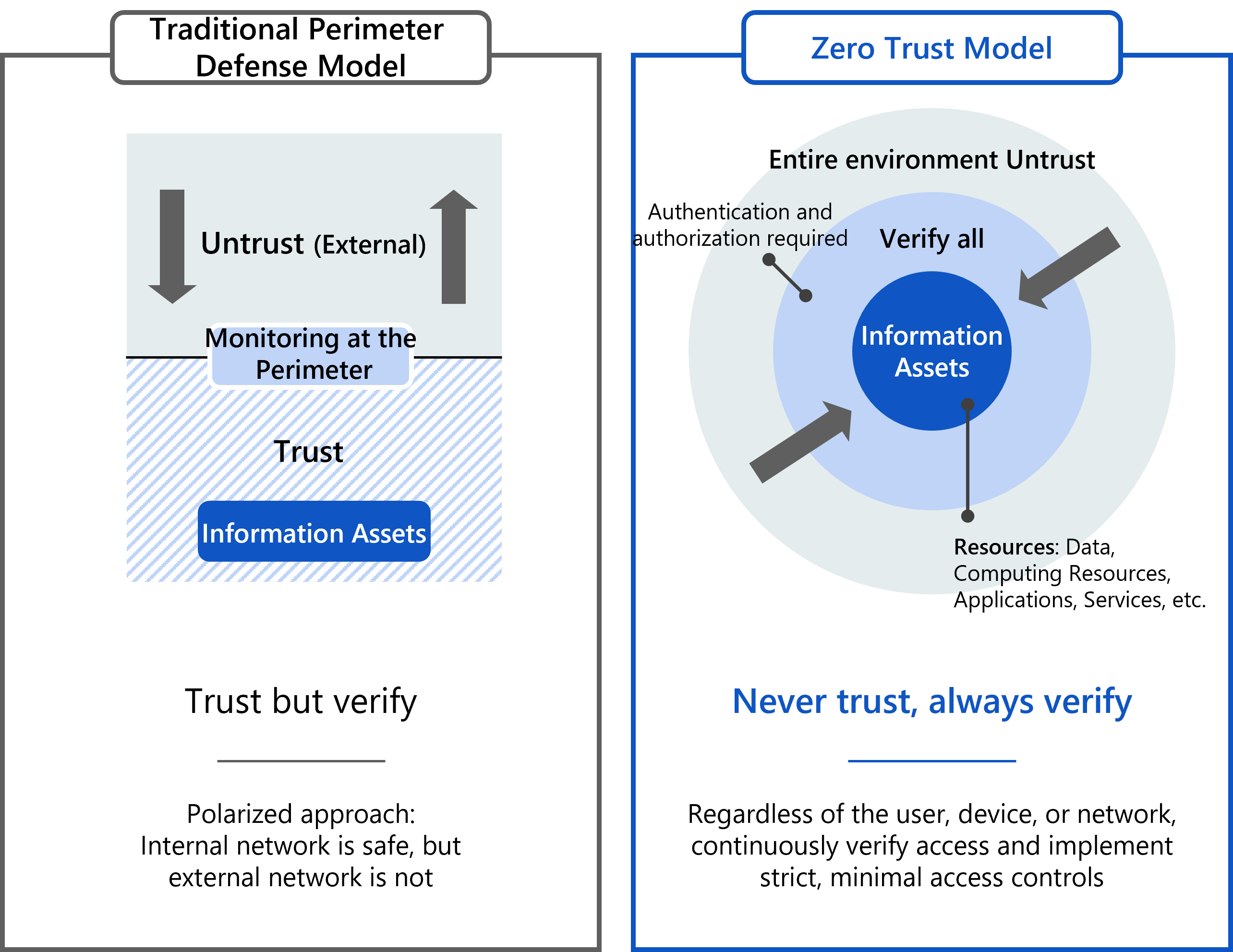
Zero Trust is a network security strategy that assumes no device or individual should be trusted by default to access an organization's IT systems. This approach contrasts with traditional models that rely on securing internal and external network boundaries.
As organizations embrace digital transformation and adopt more flexible work styles, the demand for productivity tools that are not tied to specific locations or times is increasing. However, as work styles diversify, the dispersion of information assets complicates the task of addressing security threats with conventional models.
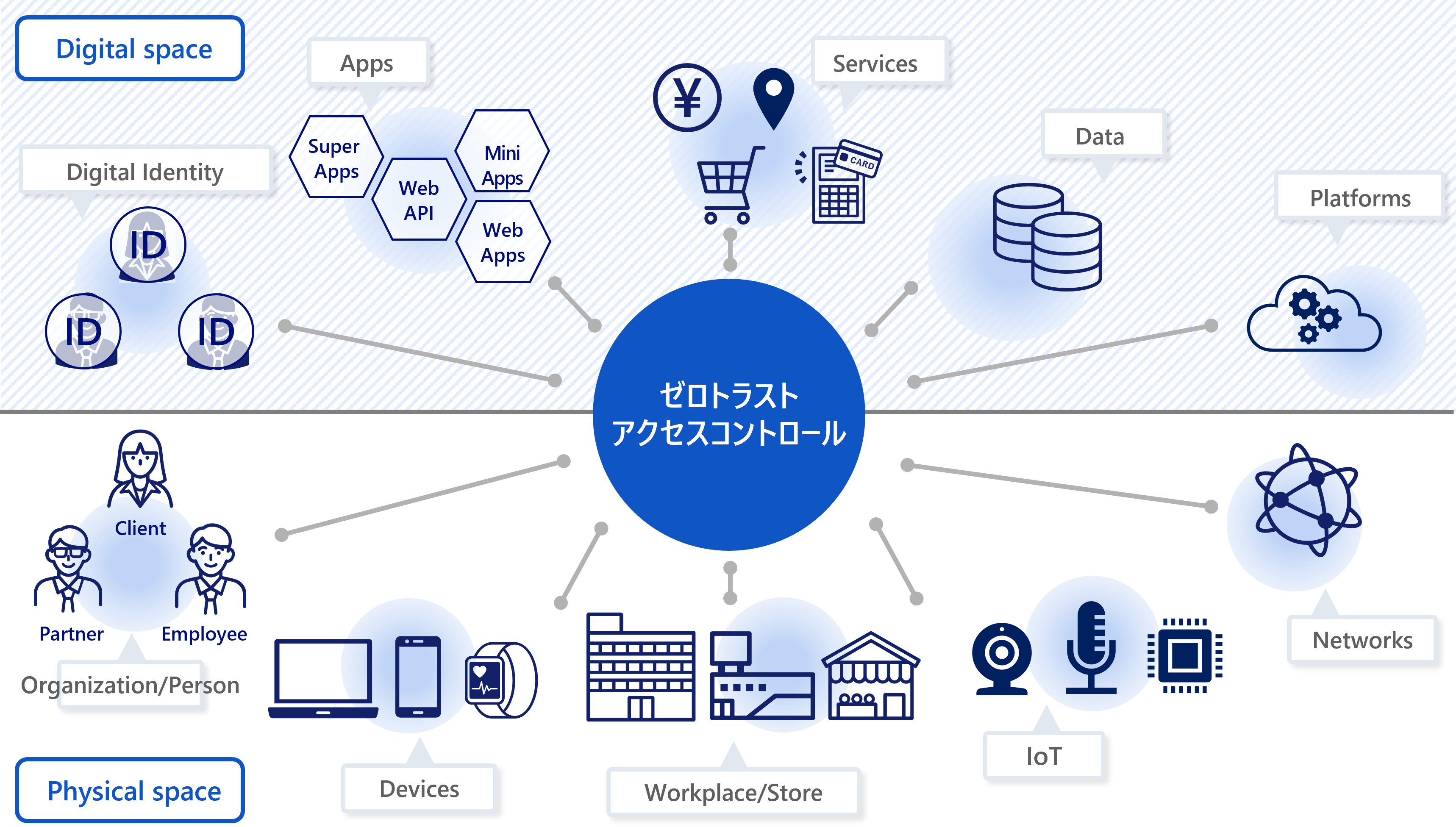
Implementing a Zero Trust strategy involves addressing various aspects, including information systems, networks, endpoints, access rights, identity management, logging, and security policy changes.
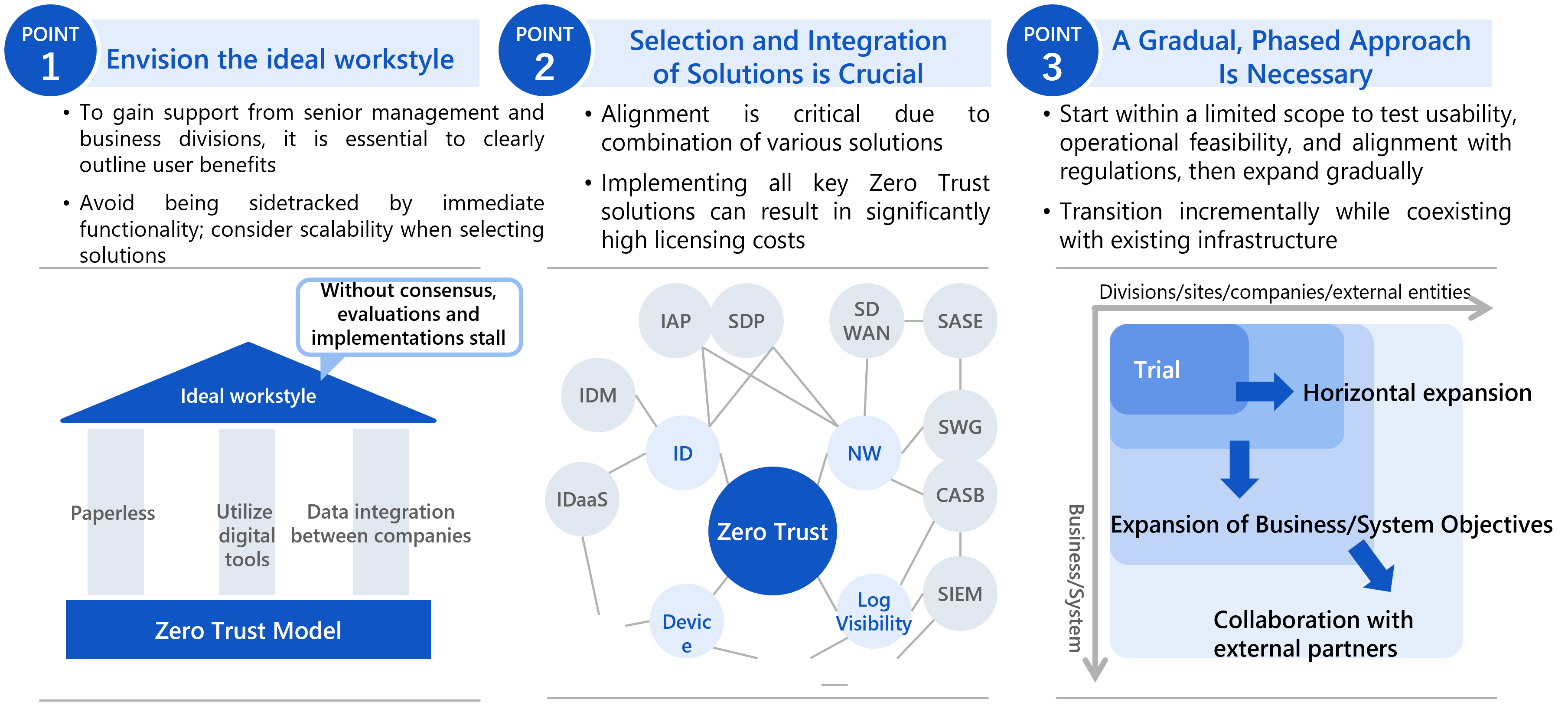
To ensure a smooth transformation, it's important to define the desired work style, align it with management and stakeholders, and consider both infrastructure and organizational needs. Instead of implementing a large-scale transformation all at once, a phased approach is often more effective, allowing early benefits while addressing emerging challenges.
NRI's Zero Trust Conceptualization Service helps clients develop a roadmap that defines the ideal work style, outlines the future infrastructure configuration, and guides its implementation.
Digital Workplace Architecture
OA and Communication Infrastructure Concept
In order to improve productivity in remote work and achieve effective collaboration, including with partner companies, we support the development of a concept for the development of a digital environment (terminals, network, authentication, digital tools) that provides both security and productivity.
IT Sherpa
Supporting Architecture with IT Operations
NRI's IT Sherpa service guides IT organizations through digital transformation (DX), streamlining and enhancing IT operations to create additional capacity. Together, we tackle corporate and societal challenges.
IT Service Management
Next Generation Operations Concept
Next-generation operations require an agile development cycle and a DevOps framework for continuous feedback. At NRI, we assist clients in creating a Next-Generation Operations Concept, developing strategies to optimize their structure, personnel, processes, and infrastructure, and bringing their vision to life.
In agile development for digital transformation, software is released and operated in short cycles to ensure user functionality. This demands seamless collaboration between development (Dev) and operations (Ops) teams within a unified framework. By operating in rapid cycles, these teams ensure user satisfaction through a cohesive, agile environment. A DevOps framework that promotes agility and operational feedback is essential for effective management.
We assess our clients’ operations, design a customized Next-Generation Operations Concept, and create a plan to improve processes, organizational structure, and infrastructure.
Resiliency Enhancement Support
As IT systems grow increasingly complex, enhancing resiliency is essential to minimize failure impact and enable quick recovery. We identify key initiatives to strengthen resiliency and provide support for their implementation.
IT, which was once merely a tool for improving operational efficiency, has now become a core component of business. The way an organization responds to system outages can significantly impact its success or failure.
At the same time, with the adoption of cloud technologies and microservices, system architectures have become increasingly complex, making issue resolution more challenging.
As a result, it is no longer sufficient to focus solely on robustness to prevent system failures. There is an increasing demand to enhance resiliency — the capability to minimize the impact of disruptions and achieve swift recovery when failures occur.
Beyond traditional operational improvements, we emphasize innovative approaches, including:
- Architecture: Incorporating monitoring with observability and implementing defensive measures.
- Structure and Process: Structuring SRE teams to focus on operational resolution through engineering.
- Personnel Training: Offering fault-handling training and conducting regular operational drills to prepare for unexpected scenarios.
Assessment
Evaluate the current resiliency level from multiple perspectives to identify critical issues requiring attention.
Conduct independent assessments of system failures to pinpoint areas for improvement.
Maintenance Plan Development
Develop a detailed maintenance plan addressing the issues identified during the assessment.
Implementation Support
Provide support for implementing measures outlined in the maintenance plan.
Examples of Key Activities
- Facilitate the integration of SRE principles into traditional operational workflows.
- Assist in maintaining architecture and introducing tools to enhance system observability.
- Customize NRI's system failure response training to meet organizational needs, covering planning, execution, and feedback for effective implementation.
IT Due Diligence (IT-DD)
IT Due Diligence Support
NRI supports M&A efforts by conducting thorough research on the target company's IT systems, identifying key investment strategy challenges, preparing decision-making materials for final agreements, and developing a roadmap to address these challenges, serving as a foundation for post-acquisition activities.